
Electronic Invoice (NF-e) in Rio de Janeiro
Do you know everything about the Electronic Invoice (NF-e) in Rio de Janeiro? The text below explains everything about this topic in a simple, objective way, so you understand this important tax document and clear up your doubts.

What is the Electronic Invoice?
The Electronic Invoice (NF-e) is a tax document issued and stored electronically.
Its purpose is to document, for tax purposes, purchase and sale transactions of goods or services rendered between interested parties.
This document carries the issuer's digital signature, a legal and tax guarantee for the recipient, which also meets the requirements of Brazilian tax authorities such as the State Treasury Department and Brazil's Federal Revenue Service.

Purpose of the Electronic Invoice (NF-e) in Rio de Janeiro
The Electronic Invoice in Rio de Janeiro aims to integrate and share information in order to simplify, cut red tape, and modernize Brazilian tax administration — reducing costs and making it easier to meet tax obligations, while strengthening control and oversight through information exchange between interested parties.

Benefits and advantages of introducing the Electronic Invoice (NF-e) in Rio de Janeiro
Rolling out this document also brought several benefits to society, tax administration, and businesses. We've listed some of these advantages below:
Benefits for society:
- A better environment through reduced paper consumption;
- Encourages e-commerce and the use of new technologies, with new business and job opportunities in services related to the Electronic Invoice;
Benefits for tax administration:
- Increased reliability of the Invoice;
- Better tax oversight, enabling improved information exchange between tax authorities;
- Lower costs in the invoice-control process;
- Reduced tax evasion and increased tax collection;
Advantages for businesses:
- No more manual entry of invoices when receiving goods;
- Better delivery-logistics planning thanks to advance receipt of Electronic Invoice information and order verification;
- Fewer bookkeeping errors caused by invoice data-entry mistakes;
- Lower costs for purchasing, printing, shipping, and filing tax paperwork;
Rolling out the Electronic Invoice (NF-e) in Rio de Janeiro
To meet the provisions of Constitutional Amendment No. 42, item XXII, Article 37, the 1st National Meeting of Tax Administrators (ENAT) was held in 2004, in the city of Salvador.
This meeting sought solutions across the three levels of Government, aiming to promote greater administrative integration, standardization and quality of information, lower costs and operating workload in service, greater oversight effectiveness, greater potential for coordinated and integrated tax actions, greater potential for tax information exchange across levels of government, large-scale data cross-referencing with standardized data, and standardized procedures — all aiming to promote the integration and standardization of tax systems across states.
The Electronic Invoice began through a partnership formed between ENCAT (the National Meeting of State Tax Administrators and Coordinators) and Brazil's Federal Revenue Service.
The first phase of the Electronic Invoice project began in 2005, covering the treasury departments of six states and several businesses.
Rio de Janeiro's state-specific legislation on the Electronic Invoice
- Annex II of Part II of SEFAZ Resolution 720/2014: Sets out the procedures related to ancillary obligations for issuing the Electronic Invoice (NF-e) in the State of Rio de Janeiro;
- Update to Book VI of the RICMS – Annex I: Sets out tax documents related to transactions involving goods;
- ICMS Protocol No. 042/2009: Sets out the requirement to use the Electronic Invoice (NF-e) in place of the Invoice, model 1 or 1-A, based on CNAE criteria and transactions with the recipients it specifies;
- ICMS Protocol 10/2007: Sets out the requirement to use the Electronic Invoice (NF-e) for the cigarette manufacturing and liquid fuel distribution sectors;
- SINIEF Adjustment No. 07/2005: Establishes the Electronic Invoice and the Auxiliary Document of the Electronic Invoice.
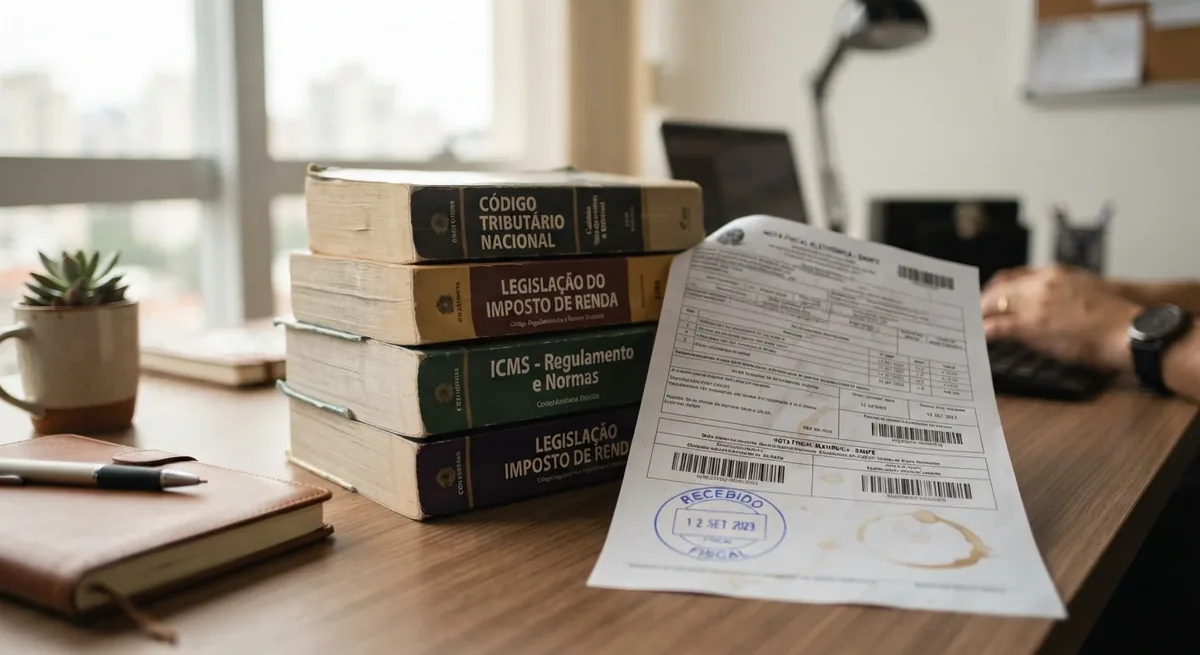
Start working with the Electronic Invoice (NF-e) in Rio de Janeiro easily and efficiently.
TagPlus, the best and largest management system for your business.