
Electronic Invoice (NF-e) in Belém
Next, we'll talk about the Electronic Invoice (NF-e) in Belém! Don't miss the post below explaining why this important tax document matters for your business!

What Is an Invoice? When Is It Used?
Invoices (NF) are used to record commercial transactions — purchases, sales, or services. They document the transaction and are also an important record for tax collection.
They can also be used when transporting goods, and for loans and donations.
Now that we understand what an Invoice is, let's take a closer look at the Electronic Invoice.
Main features of the Electronic Invoice (NF-e) in Belém:
The Electronic Invoice has the same features as a regular invoice, but now in electronic form.
To certify that Electronic Invoices were genuine, the Tax Administration required a digital signature on every NF-e, which proves its legal and tax validity. This certificate must be obtained by businesses before issuing this tax document, and its main features are:
- Signing Electronic Invoices;
- Identifying the computer at the moment it connects to the SEFAZ system to transmit Electronic Invoices;

Why the Electronic Invoice (NF-e) Was Created in Belém
With technological progress and globalization, commercial transactions between businesses increased, making it harder for tax authorities to keep track.
To improve oversight, the Tax Administrations joined forces to make the process of monitoring and verifying tax obligations simpler.
Let's look at how the Electronic Invoice (NF-e) was established in Belém:
This project began on December 19, 2003, with Constitutional Amendment 42, which established in its Item XXII:
"The tax administrations of the Union, the States, the Federal District, and the Municipalities — essential activities for the functioning of the State, carried out by staff from specific career tracks — will have priority resources to carry out their activities and will operate in an integrated manner, including through the sharing of records and tax information, as provided by law or agreement."
Based on this, Tax Administrators held several meetings called the National Meeting of Tax Administrators, whose main goal is the principles set out in the Constitutional Amendment, as well as:
- Promoting greater administrative integration among tax authorities;
- Standardizing procedures;
- Improving the quality and use of information;
- Reducing operational workload costs;
- Coordinated and integrated oversight through the exchange of tax information across tax authorities;
The gains from implementing the Electronic Invoice (NF-e) in Belém go far beyond what is listed above — businesses and society as a whole benefited too.
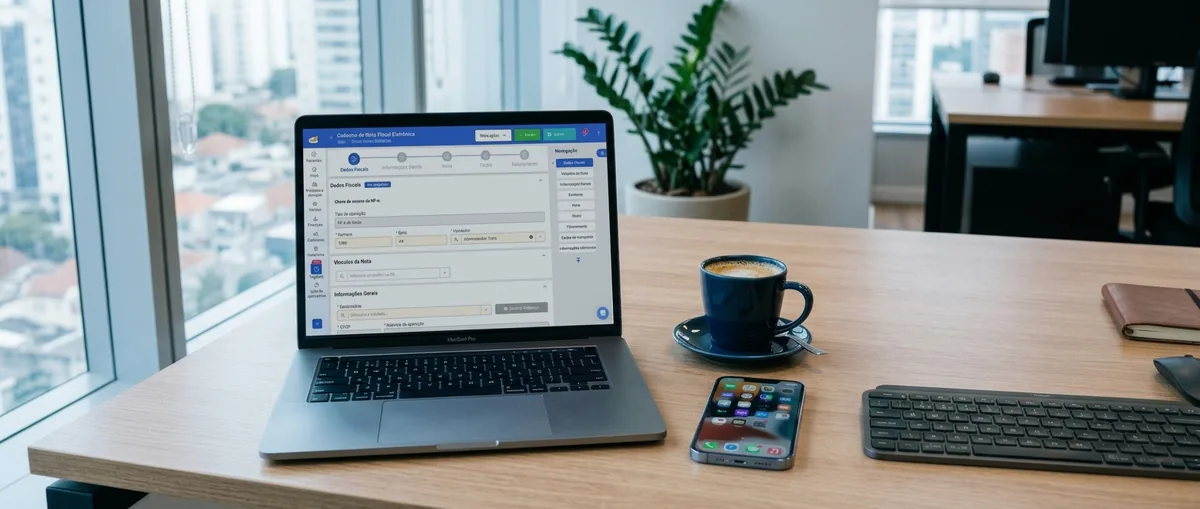
Benefits and Advantages for Businesses
The Electronic Invoice improved how invoices are issued and how tax authorities carry out oversight, producing several gains for everyone involved in a business transaction. Let's look at what these gains were:
Advantages and benefits for buyers and sellers of goods:
- Lower paper costs, thanks to fewer printouts, shipments, and storage of tax documents;
- Fewer errors when filling out documents, and no more need to manually re-enter Invoice data when receiving goods;
- Better business preparation, since companies know the Electronic Invoice details in advance, enabling better planning of their resources;
Its implementation also brought gains for society, including:
- Lower paper consumption by businesses, since the document is now digital;
- Job creation in this market segment and new opportunities for businesses;
Other advantages for tax authorities:
- Standardization and greater reliability of tax documents;
- Better communication between tax authorities, making joint oversight actions faster and more effective;
- Increased tax collection;
Legislation on the Invoice in Belém:
ICMS Regulation, approved by Decree No. 4676, of June 18, 2001.
Subsection IV of the RICMS covers the Electronic Invoice (NF-e) and the Auxiliary Document of the Electronic Invoice (DANFE). Normative Instruction No. 3, of February 14, 2010, sets out the requirement to issue the Electronic Invoice (NF-e).
Ordinance No. 33, of March 14, 2008, sets out the ex officio registration of taxpayers required to issue the Electronic Invoice (NF-e).

Work Efficiently With the Belém Invoice!
Get to know TagPlus! The integrated management software that helps your business issue and manage your Electronic Invoices (NF-e) in Belém!