
Complete NFC-e guide
What is the NFC-e: The NFC-e Project is a module of Brazil's Public Digital Bookkeeping System (SPED) project, which also includes the NF-e, the CT-e, Digital Tax Bookkeeping, and Digital Accounting Bookkeeping.

What NFC-e stands for
NFC-e stands for Nota Fiscal do Consumidor Eletrônica (Electronic Consumer Invoice), an electronic document that replaces the traditional cupom fiscal (paper receipt) issued at stores, supermarkets, pharmacies, and retail businesses in general across most Brazilian states. It documents in-person sales or home-delivery sales to the end consumer (an individual or a business) as an internal transaction, without generating ICMS tax credit for the buyer.
The NFC-e is similar to the NF-e, since it's also internet- and software-based, generated in XML format, and carries the seller's digital signature.
Its goal is to modernize and cut red tape in the relationship between businesses and tax authorities, lowering costs for both sides and reducing tax evasion.
NFC-e (Electronic Consumer Invoice) is an electronic document that replaces paper consumer sales invoices.
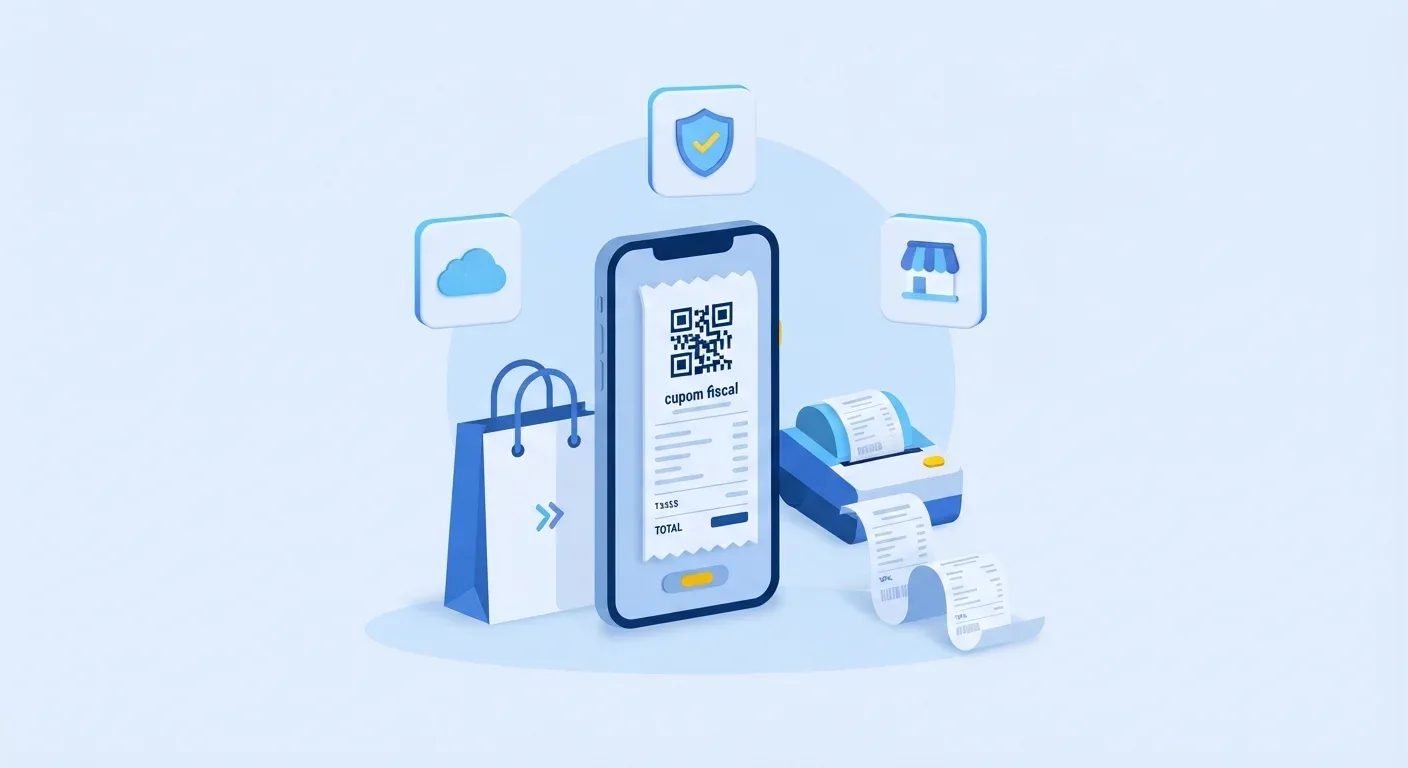
What the NFC-e replaces
The NFC-e replaces paper consumer sales invoices — that is, the Nota Fiscal model 2 and the cupom fiscal issued by an ECF. It documents in-person sales or home-delivery sales to the end consumer.
The NFC-e should be used in transactions at the end of the supply chain — that is, sales to the end consumer, whether an individual or a business. If it's a business, note that the good or service in question must be for its own use, not as an input for producing goods or providing the service it sells.
How to issue it
To start issuing the NFC-e, you first need to make sure you have the basic requirements to issue it, which are:
- A Business Digital Certificate under the ICP-Brasil standard, containing the CNPJ number of any of the taxpayer's establishments;
- Being in good standing with your state tax registration;
- A computer with an internet connection;
- A regular printer (thermal or laser);
- NFC-e issuing software;
- Being accredited with SEFAZ (authorization to issue);
- Having a Taxpayer Security Code – CSC (token), issued by SEFAZ when you get accredited.
Getting the Digital Certificate to issue the NFC-e
The Digital Certificate is what guarantees the authenticity of the NFC-e your business issues. It can be obtained from a Certifying Authority.
SEFAZ accepts type A1 (file) or A3 (card or token) certificates. Check with your provider for the model that best fits your business. The headquarters' certificate is valid for all its branches nationwide. You can also use the same Digital Certificate you use for the NF-e.
Taxpayer Security Code – CSC (token)
The Taxpayer Security Code – CSC (token) is an alphanumeric code known only to the taxpayer and SEFAZ, used to guarantee the authorship and authenticity of the DANFE-NFC-e. Each business gets a unique code.
The CSC is issued to the taxpayer once their request for access to the test and/or production environments is approved.
This code is required for the DANFE-NFC-e to be valid, so it must be registered in the taxpayer's issuing software before the first invoice is issued.
NFC-e issuing software
A business that wants to issue both NFC-e and NF-e needs to get a commercial solution that fits its needs, like the TagPlus issuing software, which you can try for free.
Advantages of the NFC-e
The Electronic Sales Invoice to the End Consumer (NFC-e) brings a range of advantages for the businesses issuing it, for consumers, and for the tax authorities themselves.
The NFC-e only brings benefits to your business, simplifying procedures and making everything much easier and more cost-effective.
Savings
- No need for a Fiscal Receipt Issuing Device (ECF).
- Use of any non-fiscal printer, thermal or laser, with no need for tax-authority authorization.
- Simplified ancillary obligations (no need to print the Z Reduction and X Reading reports, Summary Map, Seals, Revalidation, Occurrence Reports, Deactivation, etc.);
- Significant reduction in paper costs;
- Use of non-certified paper, with lower storage-time requirements;
Speed
- Real-time or online transmission of the NFC-e;
- No need for the tax authority to certify the software;
- No need for prior authorization of the equipment used;
Innovation
- Possibility of using new mobility technologies (issuing from tablets and smartphones);
- Integration of physical and online sales platforms.
On top of that, you still get the flexibility to open new points of sale during high-traffic periods, with no need for prior tax-authority authorization.
Advantages of the NFC-e for consumers
The NFC-e lets you look up your NFC-e in real time or online on the SEFAZ portal (via QR code); it also guarantees the validity and authenticity of the transaction; and lets you receive the DANFE for the NFC-e in Eco format (summarized) or by email or SMS.
Advantages of the NFC-e for tax authorities
The NFC-e provides real-time information on tax documents; improves retail tax oversight; and also enables remote monitoring of transactions, data cross-checking, and electronic auditing.