
Digital Certificate
There's a lot of talk about advances in technology, and one of the biggest changes it brought is the digital signature, which certifies a given user over the internet. It carries all the power of a regular signature, plus some added benefits.

What is a digital signature
The digital signature was a breakthrough in verifying authenticity virtually. It optimizes and simplifies processes, which matters a lot today.
Want to learn more about it? Follow along with our study:
Historical evolution
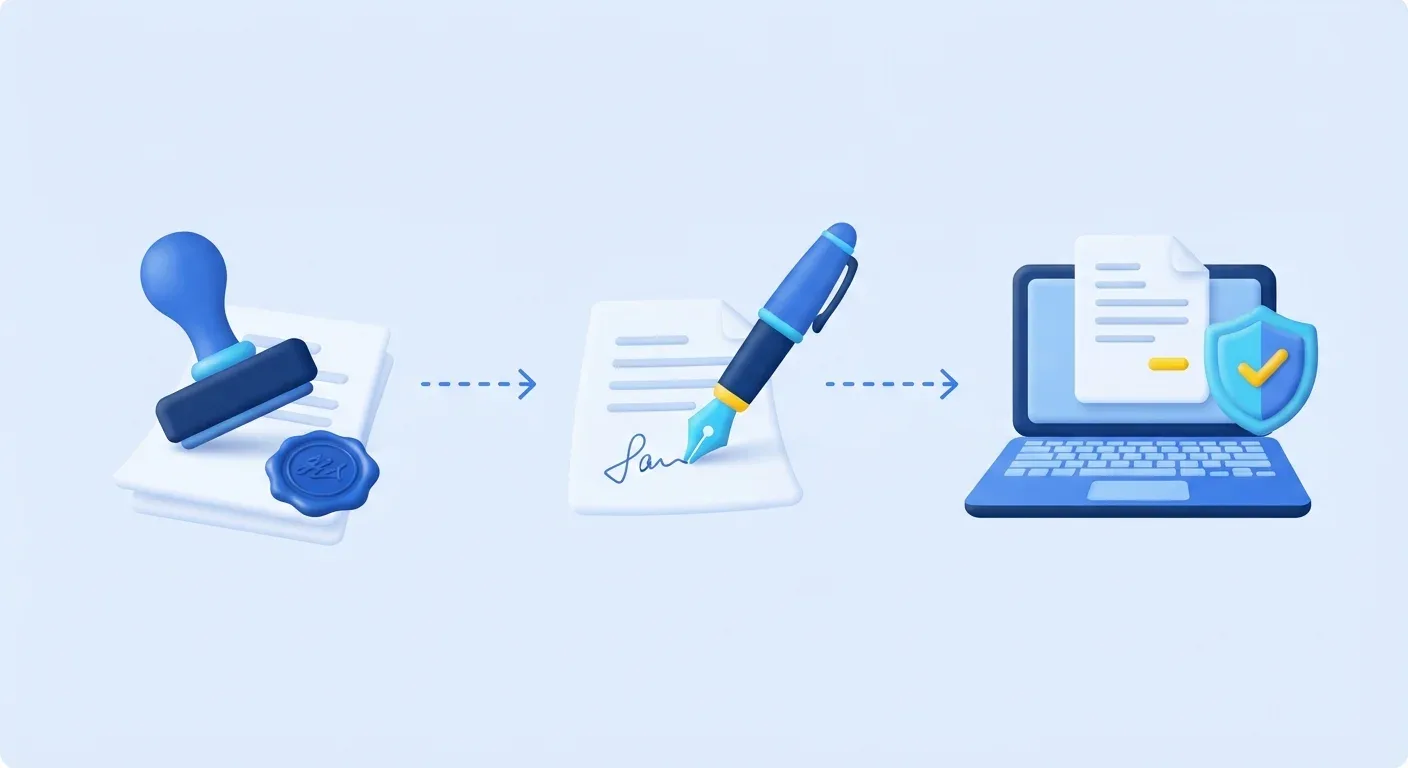
Record-keeping customs arrived with Portuguese culture. People in Brazil have always sought ways to certify the authenticity of documents, whether through stamps, seals, or a handwritten signature.
As technology advanced, doing this manually became a bit outdated and cumbersome.
The internet made it easier to communicate information and data, and would have been the perfect tool to leave the old mechanical way of certifying documents behind. However, there was a lot of uncertainty about guaranteeing authenticity.
Overcoming that obstacle, digital certification ushered in an era where information can be exchanged and stored over the internet, securely and legitimately.
The digital certificate
Digital certification is a technique used for identification and authenticity. It lets electronic transactions happen in a way that can't be disputed. The technology prevents tampering, capturing private information, or other improper actions.
This makes it possible to carry out a range of procedures and transactions quickly and accurately. Examples include: issuing documents, accessing confidential information, closing deals, etc.
How it works
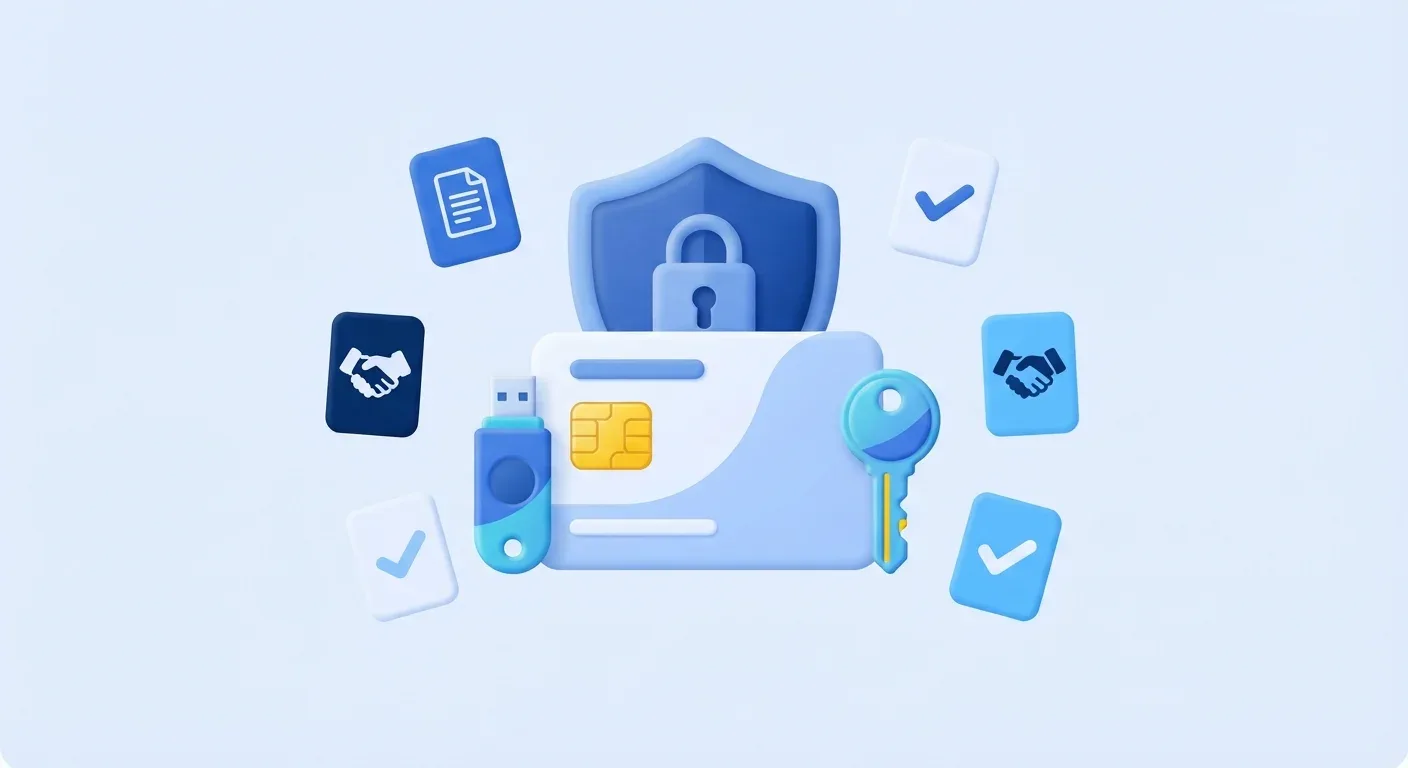
Digital certification relies on a resource called a digital signature. This, in turn, comes from combining three cryptographic functions (all covered below): public and private encoding keys, and the "hash" tool.
Encryption keys are made up of a sum of bits based on a given algorithm capable of encrypting and decrypting information. They're built using symmetric or asymmetric (public) keys.
A symmetric key is one where the sender and receiver use the same key, or form of access, to decrypt information.
An asymmetric key, used in the digital certificate, has two types of decoding: a private one and a public one.
Even though they're generated at the same time (by whoever creates the document), the second one's job is to encrypt the file or verify a digital signature, while the private key is used to encrypt the text, or create a digital signature.
However, as already shown, digital certification isn't limited to just these resources. It also relies on the "hash" tool, also based on cryptography, which passes along a summary of the operation using the information contained in the document.
The "hash" always has a fixed size, no matter how much data it summarizes — so any change to the information will make the summary come out different, revealing that a change occurred.
This way, the digital certificate is a document with a digital signature that holds data like the user's name (which can be a person, a company, an institution, etc.), the issuing entity, the expiration date, and the public key.
This process ensures that the shared information is only accessible to authorized people or organizations, and it guarantees its legitimacy so the recipient can confirm it (using the private key).
It's worth noting, though, that these files must be transmitted over secure connections, like those using an encrypted information-transfer protocol.
Types of certificates
In this section we'll cover the A1 and A3 certificates, the most important ones and the ones available through our company. We'll also look at certificates for individuals and businesses in the next topic.
ICP-Brasil offers several categories of digital certificates. Category A is meant for identification and authentication purposes; let's take a look:
A1 digital certificate
has keys of at least 1024 bits, generated by software. It's stored on a device, like a hard drive, and is valid for up to one year.
A3 digital certificate
also has keys of at least 1024 bits, but they're generated by hardware. It's stored on a token card and is valid for three years.
The basic difference between the two forms of authentication is that the first stores this information on the requester's computer, while the second keeps it on smart cards or password-protected tokens.
e-CPF, e-CNPJ, and OAB
Both forms of authentication are only available for A1 and A3 certificate types.
The individual digital certificate (e-CPF) is basically an extension of the CPF (Brazilian individual taxpayer registry), letting individuals access several Federal Revenue Service services online, such as filing individual income tax returns and looking up their records and tax status. It also lets citizens correct payment errors.
The e-CNPJ also has the advantages already covered, plus it lets the user:
- Set up online installment plans for business debts;
- Amend a DARF (federal tax payment form);
- Submit DIPJ, DCTF, and DITR filings;
- Issue certificates;
- Register electronic powers of attorney;
- Track the progress of tax cases without having to visit a Federal Revenue Service office;
- Access the Social Connectivity system for FGTS — simplifies the FGTS (severance fund) payment process, reduces operating costs, increases security and confidentiality of FGTS transactions, and makes it easier for businesses to meet their FGTS and Social Security obligations.
The OAB digital certificate, for its part, stores the information from a lawyer's or trainee lawyer's Professional ID Card, on a chip or a cryptographic token device. It allows authentication in digital case files and uploading documents. Case file uploads through it depend on the Court or Bar Association enabling the system.
It's worth noting that the e-CPF, e-CNPJ, and digital OAB certificate aren't free. They must be obtained from entities accredited by the Federal Revenue Service.
How to get your digital certificate
At TagPlus, you can find integrations with digital certificate and electronic signature partners:
- Soluti: get your digital certificate hassle-free;
- GlobalCerti: digital certificate solutions with speed, convenience, and security;
- BHZ Certificação: issuing and renewing certificates for individuals and businesses;
- D4Sign: electronic and digital signature platform;
- WeSign: solutions for the electronic signing of documents.
You can hire these services right inside TagPlus ERP, through the App Store. Terms and pricing vary by partner.
Technological solutions like the digital certificate make advances like this possible. ICP-Brasil brings these benefits to everyone who can use it.
Ready to simplify this routine at your business?
Use TagPlus to put this into practice in your business, hassle-free.